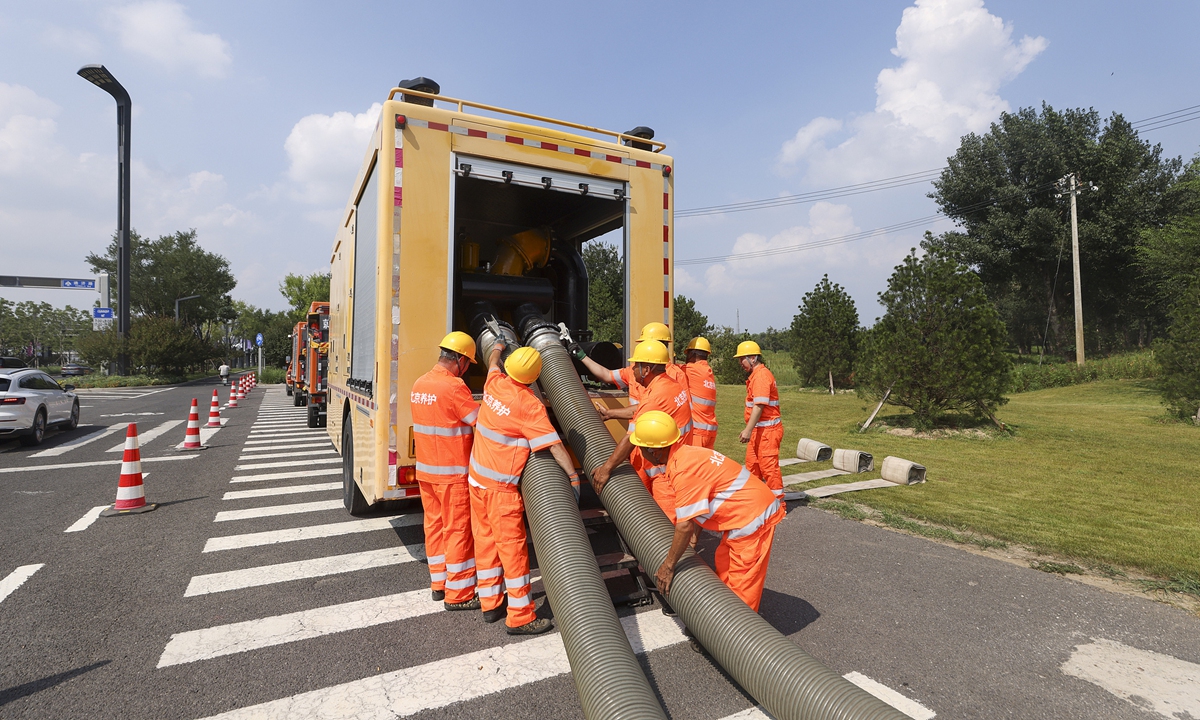
Photo: VCG Beijing activated a Level II flood-control emergency response, the second-highest level, on Tuesday as authorities warned of heavy rain and heightened risks of urban waterlogging and landslides. Most parts of the city are expected to receive more than 100 millimeters of rain within six hours and over 150 millimeters within 24 hours from Tuesday evening through Thursday, according to the Beijing meteorological service. Beijing issued an orange alert for rainstorms at 10 a.m. Monday, while several districts, including Fangshan, Daxing and Tongzhou, issued the highest-level red alerts. Authorities said residents in high-risk areas would be evacuated by Tuesday evening. Construction work will be suspended, and mountain campsites and scenic areas will be closed. Starting Wednesday, employers are encouraged to adopt flexible working hours or staggered schedules. Schools may suspend classes and in-person training depending on conditions, while organized outdoor sports activities will be halted. Beijing's drainage authorities have put 252 flood-control teams on standby. Preparations, including the installation of flood barriers, have also been stepped up at 368 subway stations, 33 hospital campuses and 17 elderly care facilities. In Fangshan, where exceptionally heavy rain is forecast, authorities have begun evacuating residents from high-risk areas ahead of the downpours and deployed emergency rescue teams and supplies, with more than 150,000 items of emergency equipment and materials on standby. Dolphin, the 13th typhoon of the year, made two landfalls in Zhejiang Province on Sunday. The National Meteorological Center on Tuesday maintained an orange alert for rainstorms, forecasting heavy rain across a broad swath of the country through Wednesday afternoon, including Zhejiang, Shanghai, Shandong, Beijing and Tianjin. As of 7 a.m. Monday, about 167,900 people had been moved from vulnerable areas on land and at sea in Fujian Province. By late Sunday, Shanghai had evacuated around 215,600 people from areas considered at risk. 。 央视新闻客户端消息(新闻联播):我国钢铁产量连续多年位居世界首位。今年以来,钢铁企业依托全国重点实验室,聚焦高端特种钢材持续发力,不断实现核心技术突破,一大批高端钢材实现了自主量产。 钢材如何做到强度过硬,还能抵御海水腐蚀?在河北唐山的钢铁实验室,记者找到了答案。钢材加工过程中会产生易导致材料脆化的碳化物,科研人员通过调控钢材原子结构,将碳化物有效包裹。 研究人员给记者算了一笔账,一台海上风电机要用钢数百吨,换上这种高性能钢,钢板可以做得更薄,合金用量也大幅减少。 如今,不只在海上,我国已经搭建起覆盖深海装备、舰船制造、航空航天等多场景的高端钢材自主研发量产体系,从材料配方、轧制工艺到批量生产实现全链条自主可控。